Buy georgedimitrov.eu ?
We are moving the project
georgedimitrov.eu .
Are you interested in purchasing the domain
georgedimitrov.eu ?
domain@kv-gmbh.de · 0541-91531010
Buy georgedimitrov.eu ?
Can the direct current cross-section be distributed across multiple cables?
Yes, direct current can be distributed across multiple cables. By connecting multiple cables in parallel, the total current can be divided among the cables, allowing for the distribution of the direct current across them. This method is commonly used in electrical systems to ensure that the current is evenly distributed and to prevent overloading of individual cables. **
How do I determine the polarity of cables in direct current?
To determine the polarity of cables in direct current, you can use a multimeter set to the DC voltage setting. Connect the red probe to the positive terminal of the cable and the black probe to the negative terminal. If the multimeter shows a positive reading, then the red probe is connected to the positive terminal. If the reading is negative, then the red probe is connected to the negative terminal. This method helps you identify the polarity of the cables accurately. **
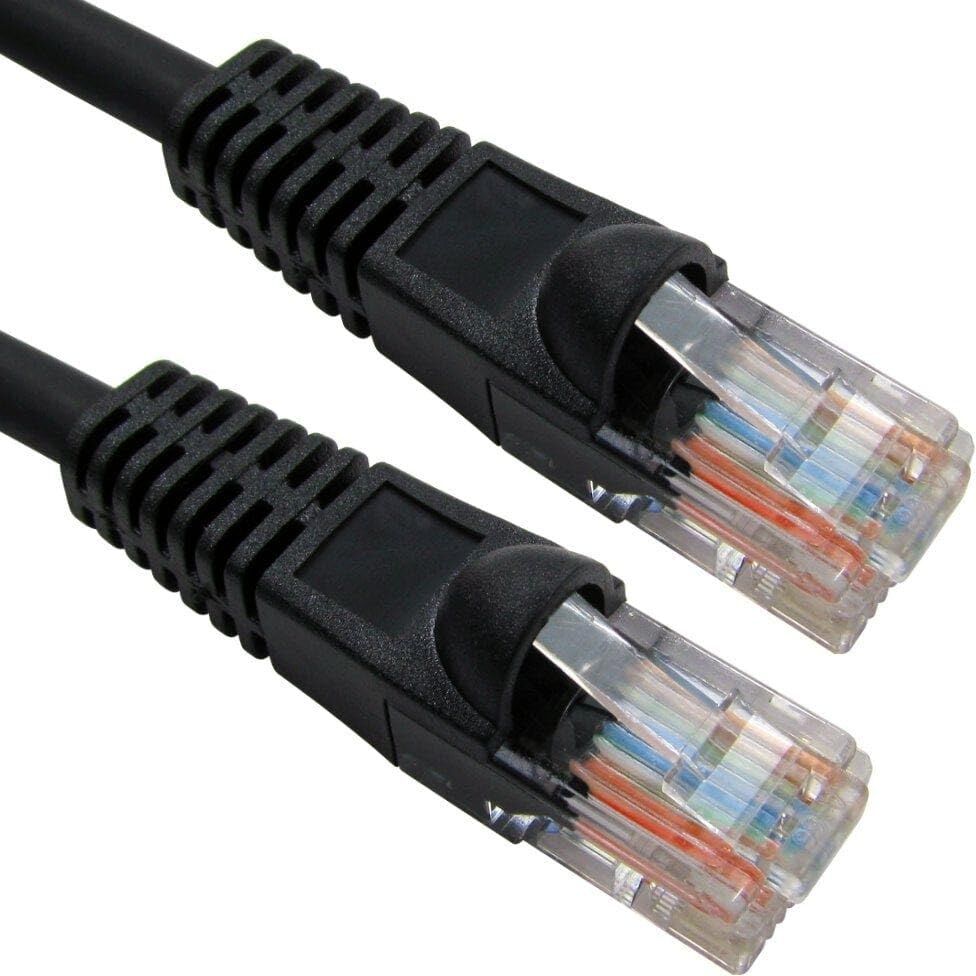

Similar search terms for Cablesdirect-Cables-Direct-B5LZ-203K
Top-Angebote
Products related to Cablesdirect-Cables-Direct-B5LZ-203K:
-
Cablesdirect Cables Direct 20m CAT5E Patch Cable (Violet)Cables Direct 20m Cat5e U/UTP network patch cable with moulded RJ45 connectors at both ends, in violet. A budget 10/100 cable with four unshielded twisted pairs; it uses copper-clad aluminium (CCA) conductors.13,99 £*Shipping: 0,00 £Secure redirect to the provider
-
Cables Direct B5LZ-202K 2m CAT5E U/UTP Patch Cable (Black)Cat5e is a high-signal integrity twisted pair cable, commonly known as Category 5e. Most are unshielded, using the twisted pair design for noise rejection, while some are shielded. It's often employed in computer networks like Ethernet.10,99 £*Shipping: 0,00 £Secure redirect to the provider


-
Do you need thicker cables for direct current than for alternating current?
No, you do not necessarily need thicker cables for direct current (DC) than for alternating current (AC). The current-carrying capacity of a cable is determined by factors such as the material, size, and insulation of the cable, as well as the voltage and current being carried. Both DC and AC have their own unique considerations when it comes to cable sizing, but the need for thicker cables is not inherently tied to the type of current being carried. It ultimately depends on the specific requirements of the electrical system and the application. **
-
How does the stress on cables differ between direct current and alternating current?
In direct current (DC) systems, the stress on cables is relatively constant because the current flows in one direction continuously. This results in a steady and predictable stress level on the cables. On the other hand, in alternating current (AC) systems, the stress on cables fluctuates as the current changes direction periodically. This can lead to higher stress levels on the cables, especially during peak currents, which may require cables to be designed to withstand these fluctuations. **
-
Why does the voltage tester light up on both cables in direct current?
The voltage tester lights up on both cables in direct current because in a direct current circuit, the flow of electric charge is unidirectional. This means that the current flows from the positive terminal to the negative terminal of the power source. When the voltage tester is connected to the cables, it detects the presence of electric potential difference between the two points, causing the light to illuminate on both cables. This indicates that there is a voltage present in the circuit, regardless of the direction of the current flow. **
-
What is the direct difference between communism and anarchy?
The direct difference between communism and anarchy lies in their approach to governance and the role of the state. Communism advocates for a classless society where the means of production are owned and controlled by the community as a whole, with the ultimate goal of achieving a stateless and moneyless society. Anarchy, on the other hand, rejects the concept of a state altogether and advocates for a society without any form of centralized authority, where individuals are free to govern themselves without the need for a government or hierarchy. In essence, communism seeks to replace the existing state with a new form of collective ownership and control, while anarchy seeks to abolish the state entirely. **


What is the difference between copper cables, twisted-pair cables, fiber optic cables, and coaxial cables?
Copper cables are made of copper wire and are commonly used for transmitting electrical signals. Twisted-pair cables consist of pairs of insulated copper wires twisted together, which helps reduce electromagnetic interference. Fiber optic cables use thin strands of glass or plastic to transmit data using light pulses, allowing for high-speed and long-distance transmission. Coaxial cables have a central conductor surrounded by an insulating layer, a conductive shield, and an outer insulating layer, and are commonly used for cable television and internet connections. Each type of cable has its own advantages and is used for different purposes based on their unique characteristics. **
"Use regular cables instead of solar cables?"
Regular cables are typically used for general electrical applications, while solar cables are specifically designed for use in solar power systems. Solar cables are designed to withstand the unique environmental conditions and high temperatures associated with solar installations, making them more suitable for these applications. Using regular cables instead of solar cables in a solar power system may result in reduced efficiency, increased risk of damage, and potential safety hazards. Therefore, it is recommended to use solar cables specifically designed for solar power systems to ensure optimal performance and safety. **
Top-Angebote
Products related to Cablesdirect-Cables-Direct-B5LZ-203K:
-
Cablesdirect Cables Direct 20m CAT5E Patch Cable (Violet)Cables Direct 20m Cat5e U/UTP network patch cable with moulded RJ45 connectors at both ends, in violet. A budget 10/100 cable with four unshielded twisted pairs; it uses copper-clad aluminium (CCA) conductors.13,99 £*Shipping: 0,00 £Secure redirect to the provider
-
Can the direct current cross-section be distributed across multiple cables?
Yes, direct current can be distributed across multiple cables. By connecting multiple cables in parallel, the total current can be divided among the cables, allowing for the distribution of the direct current across them. This method is commonly used in electrical systems to ensure that the current is evenly distributed and to prevent overloading of individual cables. **
-
How do I determine the polarity of cables in direct current?
To determine the polarity of cables in direct current, you can use a multimeter set to the DC voltage setting. Connect the red probe to the positive terminal of the cable and the black probe to the negative terminal. If the multimeter shows a positive reading, then the red probe is connected to the positive terminal. If the reading is negative, then the red probe is connected to the negative terminal. This method helps you identify the polarity of the cables accurately. **
-
Do you need thicker cables for direct current than for alternating current?
No, you do not necessarily need thicker cables for direct current (DC) than for alternating current (AC). The current-carrying capacity of a cable is determined by factors such as the material, size, and insulation of the cable, as well as the voltage and current being carried. Both DC and AC have their own unique considerations when it comes to cable sizing, but the need for thicker cables is not inherently tied to the type of current being carried. It ultimately depends on the specific requirements of the electrical system and the application. **
-
How does the stress on cables differ between direct current and alternating current?
In direct current (DC) systems, the stress on cables is relatively constant because the current flows in one direction continuously. This results in a steady and predictable stress level on the cables. On the other hand, in alternating current (AC) systems, the stress on cables fluctuates as the current changes direction periodically. This can lead to higher stress levels on the cables, especially during peak currents, which may require cables to be designed to withstand these fluctuations. **
Similar search terms for Cablesdirect-Cables-Direct-B5LZ-203K
-
Cables Direct B5LZ-202K 2m CAT5E U/UTP Patch Cable (Black)Cat5e is a high-signal integrity twisted pair cable, commonly known as Category 5e. Most are unshielded, using the twisted pair design for noise rejection, while some are shielded. It's often employed in computer networks like Ethernet.10,99 £*Shipping: 0,00 £Secure redirect to the provider
-
Cablesdirect Cables Direct USB 2.0 Type A Male to Type B Male Cable 2m - ClearCables Direct USB 2.0 cable with a Type A male connector on one end and a Type B male connector on the other, 2 metres long, with a clear jacket. Connects printers, scanners and other USB-B devices to a computer or hub. Part number USB2-102X.10,99 £*Shipping: 0,00 £Secure redirect to the provider
-
Why does the voltage tester light up on both cables in direct current?
The voltage tester lights up on both cables in direct current because in a direct current circuit, the flow of electric charge is unidirectional. This means that the current flows from the positive terminal to the negative terminal of the power source. When the voltage tester is connected to the cables, it detects the presence of electric potential difference between the two points, causing the light to illuminate on both cables. This indicates that there is a voltage present in the circuit, regardless of the direction of the current flow. **
-
What is the direct difference between communism and anarchy?
The direct difference between communism and anarchy lies in their approach to governance and the role of the state. Communism advocates for a classless society where the means of production are owned and controlled by the community as a whole, with the ultimate goal of achieving a stateless and moneyless society. Anarchy, on the other hand, rejects the concept of a state altogether and advocates for a society without any form of centralized authority, where individuals are free to govern themselves without the need for a government or hierarchy. In essence, communism seeks to replace the existing state with a new form of collective ownership and control, while anarchy seeks to abolish the state entirely. **
-
What is the difference between copper cables, twisted-pair cables, fiber optic cables, and coaxial cables?
Copper cables are made of copper wire and are commonly used for transmitting electrical signals. Twisted-pair cables consist of pairs of insulated copper wires twisted together, which helps reduce electromagnetic interference. Fiber optic cables use thin strands of glass or plastic to transmit data using light pulses, allowing for high-speed and long-distance transmission. Coaxial cables have a central conductor surrounded by an insulating layer, a conductive shield, and an outer insulating layer, and are commonly used for cable television and internet connections. Each type of cable has its own advantages and is used for different purposes based on their unique characteristics. **
-
"Use regular cables instead of solar cables?"
Regular cables are typically used for general electrical applications, while solar cables are specifically designed for use in solar power systems. Solar cables are designed to withstand the unique environmental conditions and high temperatures associated with solar installations, making them more suitable for these applications. Using regular cables instead of solar cables in a solar power system may result in reduced efficiency, increased risk of damage, and potential safety hazards. Therefore, it is recommended to use solar cables specifically designed for solar power systems to ensure optimal performance and safety. **
* All prices are inclusive of VAT and, if applicable, plus shipping costs. The offer information is based on the details provided by the respective shop and is updated through automated processes. Real-time updates do not occur, so deviations can occur in individual cases. ** Note: Parts of this content were created by AI.